
Following
What We Can Learn from a Canoe Crash


Daisy Returns
When I outlined the things that I wanted to talk about this season, leadership was something I wanted to make a point of hitting. Leadership is everywhere, all the time it seems, and I’m not immune to wanting to talk about it. In fact, I have a confession to make. While I was writing The t-Shaped Engineer last summer, I actually wrote a second book, dedicated to unpacking what it looks like to be a t-shaped leader. I’m still exploring the publication path for that book, but I think it has real potential.
And yet. I’m not going to write about leadership today. Nope. Not going to do it. In this post, I’m going to explore something a little less discussed, a little more out of the spotlight. And that is how to follow well. Not lead, but work productively with a leader, be an effective member of the team in a supporting role, truly put the organization and the project ahead of individual goals, and have the whole enterprise win.
We’re in a current moment of me, me, me. A digital age that often seems self-focused and inwardly directed, yet with many people ultimately feeling directionless and adrift. And perhaps the teams we’re on, whether at work, at home, or at play, fail just as often because of a lack of good followers as for the lack of a good leader. And, if we’re honest, we already have a good leader, THE good leader. And he’s actually asking us to be good followers – do we know how to do that well
?
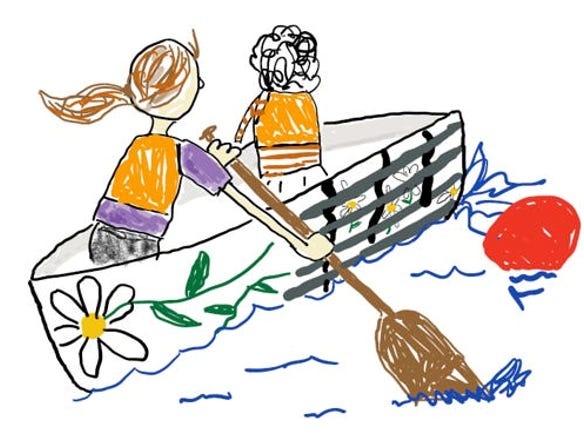
The book – my own, Daisy’s Last Ride. I posted it for you earlier this week – if you haven’t read it, there’s time to go back and give it a whirl [Daisy]. In it, three students take on a concrete canoe project where they calculate and build, present and race. Scout is a leader archetype from the beginning, assured and confident – she learns the wisdom of listening to others and letting them contribute. Patch is a builder from the first page to the last, building boats, but also building up his teammates. I want to focus on the third character, Ruth, who comes in shy and unsure, but learns how to make real contributions. In the pivotal scene, a huge crash between two boats in the middle of a high speed race, Daisy (the canoe) only survives because Ruth found the courage earlier to call for the boat to be ‘extra-strong’ with one more layer of concrete. After the crash, Ruth again finds the courage to re-race, as long as she and Scout ‘do it together.’
In preparation for this post, I jotted down a list of qualities that we might look for in good followers. I came up with 10, which seems like a lot to digest across a short Substack post. So, like any good engineer or writer (which one? Neither?), I looked for a way to organize them – could I categorize them so they’d be easier to discuss and talk about? I tried a few systems, nothing seemed to resonate or work well. Finally, it dawned on me. And I write the word ‘finally’ almost in exasperated fashion. Of course the qualities and attributes were t-shaped. Almost painfully so. You’d think after so much writing and exploring of t-shaped topics this would have come sooner.
Technical/competence based attributes, I listed two, but each was compound. Initiative and independent thinking was first on my scratch-pad, effort and competence not far behind. Good followers are not blindly so, with no initiative and no drive. Ruth in our story doesn’t just help ‘with the math.’ When the math leads her to conclude the boat has to be stronger, she musters up the courage to speak to Scout about it.
On the relationship axis, I listed three: (1) listen well, (2) communicate well, and (3) pursue the leader. I think the first two are straightforward to envision, but pursue the leader sometimes gets confused with ‘brown-nosing,’ sycophancy or being a ‘yes-person.’ For me, pursuing the leader means letting the leader know what you are doing, ensuring you understand the overall vision, and caring about the leader as a person just as much as we want the leader to care about us. At work that means keeping your boss in the loop on the decisions in your projects, the pain points and the challenges. It means coming to the morning brief ready to get your questions answered, yes, but also ready to get your boss up to speed with the things she really needs to know to be successful advocating for you and your project across the greater organization. At home, that means understanding what your spouse needs, what your children or family members need to thrive, and then genuinely caring that these needs are met. It also means getting in line sometimes and paddling toward their destination, not your own. Ruth models this beautifully in the re-race scene — she doesn’t insist on her own plan; she simply says, ‘as long as we do it together.’
In the Christ-centered purpose arena I listed two more that are clearly Christian virtues: (1) courage and discernment, and (2) faithful in feedback with no negativity. Courage and discernment are the spiritual backbone of good followership. They help us decide when to speak up, when to yield, and how to guard the unity of the team. Faithful feedback means truth without contempt — clarity without the corrosive edge of cynicism. When Ruth asks ‘One more layer?’ she does this with a posture of humility and grace, rather than accusation and contempt. In a first reading, we might miss this as simply shyness, but a deeper look reveals the potential Christian virtues riding just beneath the surface. When I handle the ‘difficult conversation’ well with a supervisor – giving feedback that may not sit well, advocating for a change in posture or direction, ‘standing up’ for subordinates who may be on the hot seat? Those are the moments where I’ve gotten the mix of courage and faithful feedback dialed in.
And, since I always argue (thanks to my theology friend who set me straight) that really, ALL the good things have God at the middle, the last three are particularly integrated across all of the dimensions: (1) being open to change, open to direction, willing to be led, (2) understanding the why, both in the current project and organizational structure, but also in how the overall project fits into God’s redemptive plan, and (3) start at joy – start with a joyful heart rather than starting from cynicism, negativity and defeat. Start at joy, not irritation. Start at joy, not suspicion. Start at joy, because joy is contagious — and so is cynicism. All of the characters in Daisy’s last ride have at least one moment of joy. Patch as he builds with purpose, Scout as the trust she learns for her teammate allows her the balance to execute the graceful pivot in the last race. Even the ‘antagonists’ Big State as they help get Daisy back into the water, and the Judge who compliments the team and cheers the final performance. None of them perfect, just as in real life, but all seeing the good more than the broken.
In some sense, followership ought to come naturally for Christians. We call ourselves followers of God. Even the word Christian—literally “little Christs”—carries the built-in reminder that we pattern ourselves after someone greater than us. We talk about servanthood, self-giving love, and the kind of leadership that kneels to wash feet.
And yet, if we’re honest, our spiritual DNA still carries our sin nature too. We drift toward self-importance. We want to be in charge. We want our idea to win, our plan to succeed, our preferences to shape the path forward. Which means that followership, like leadership, is something we must learn—and relearn—and practice with real intentionality.
That’s why I think followership deserves equal footing with leadership. Not tucked inside a bullet point like “function effectively on a team.” Not buried in the margins while we celebrate vision-casters and change-makers. If leadership is vital—and it is—then followership is its equal and necessary partner. The canoe doesn’t move otherwise.
In academic spaces, we talk endlessly about forming the next generation of leaders. I wonder what would happen if we talked just as explicitly about forming the next generation of followers—people who listen well, speak with discernment, pursue their leaders with courage and care, understand the “why,” and start from joy rather than suspicion.
Ruth does this in Daisy’s Last Ride. Quietly. Faithfully. Courageously. And because she does, the whole team holds together.
Today’s post is my quiet call for more of that. For true, t‑shaped followership—technical, relational, Christ-centered. The kind that strengthens leaders, strengthens teams, and, in the end, strengthens our witness to the One we ultimately follow.
Reflection Questions:
Where are you being asked to follow with courage?
How can you pursue a leader in your life in healthy, relational ways?
What “extra layer of concrete” am you being called to speak up about?
Do you start from joy, or from cynicism?